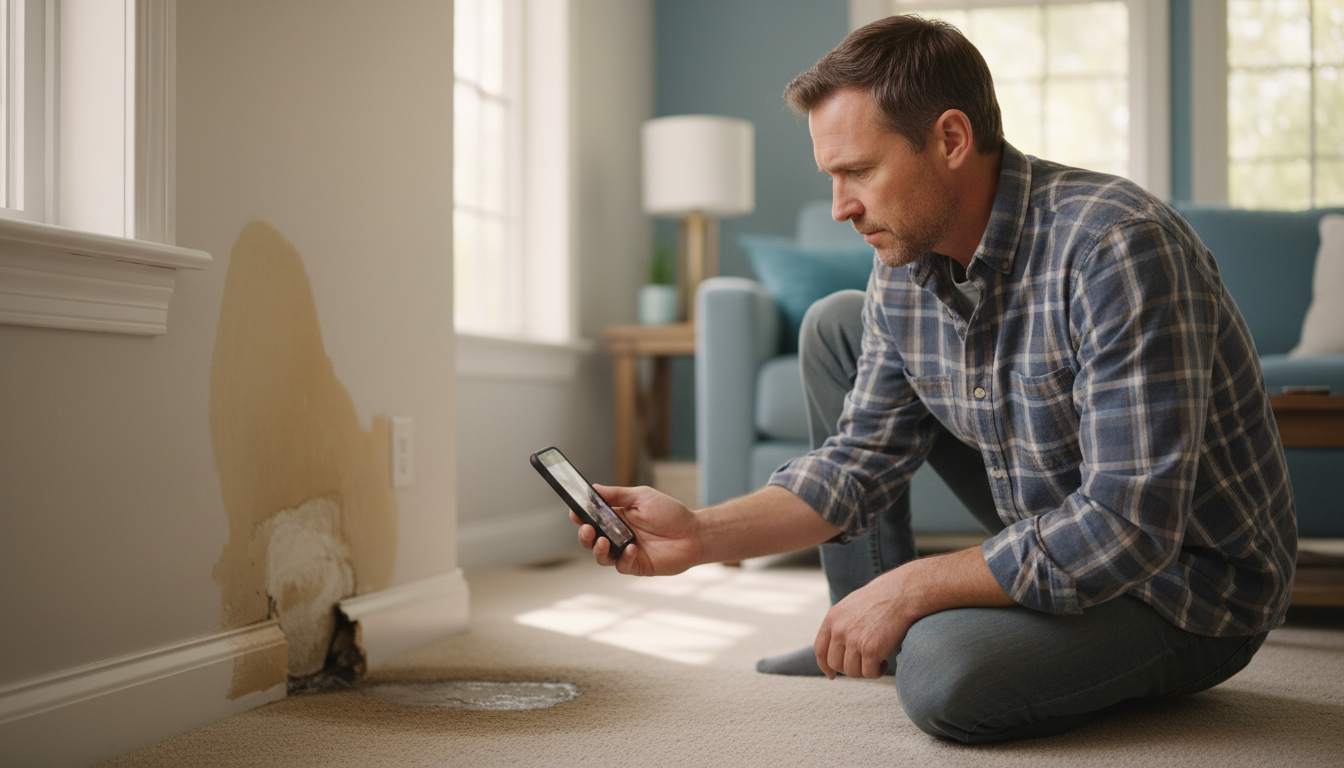
Standing water creates an urge to move furniture. A spreading ceiling stain does too. Cleaning can feel urgent. Pause first. Make a record of what you found. Include the location. Include every affected item. Your insurer gets a clearer picture from that record. A cleared room shows less.
Seek local repair help after recording the scene. Visit Water Restoration Services in Lafayette. You can find a nearby business there. Start that search before work begins. Tell the person you contact you're documenting an insurance claim. Ask what they need from you. Make that ask before damaged materials are removed. Keep your phone nearby from the first walk-through.
Before You Touch Anything
Photograph the affected area before any furniture moves. Leave flooring down for now. Leave surfaces unwiped for now. Take wide photos of the full room. Frame nearby walls, doors, and fixtures. Move closer once those wide shots end. Record stains, swelling, and warped trim. Record the visible water lines.
Record a short video on a walk through the space. Say plainly what you see. In it, cite water beneath a vanity. Cite staining below a window too. Include damp carpet outside a utility room. Do not guess the cause if unsure. A later inspection may show a different source.
Document damaged belongings in place first. Only move them to prevent further loss. Only move them to keep people safe. Tossing a soaked rug or damaged box before photos leaves a gap in the record. Photograph the item where you found it. Take a closer image of labels. Include serial numbers or visible damage.
What to Photograph and Log
Damage may look limited. Work each room in turn. Record common spaces carefully. Record unit damage with equal care. Do this if you manage a property. Capture the ceiling, walls, floor, and nearby cabinetry. Capture belongings touched by water.
A written log sits with your photos. It sits with your video. Polished language is unnecessary. Record when you noticed the problem. Record the place you first saw water. Add what you did afterward. Name who you contacted.
Your documentation set should include:
- Dated log of what happened. Also note each call, email, or visit.
- Photos of tags, labels, receipts, or serial numbers when available.
- Wide shots and close shots of rooms, surfaces, plus affected belongings.
- Video of the damage spot and the visible condition.
Group the files in one folder. Place copies away from the damaged property. Rename images by room or item if your phone allows it. Do not rely on a long camera roll. A long roll will be hard to sort later. Clear labels help an adjuster asking about one photo.
Why Water Source Matters
The source of the water can change the coverage conversation. Plumbing failure water may differ from flood water. An appliance connection may get separate treatment. Roof opening water may differ too. Describe only the facts you observed. Do not try to decide coverage yourself.
FEMA's guidance on flood insurance coverage says standard homeowner policies don't cover flooding. Flood coverage comes from the National Flood Insurance Program. Development of flooding can be slow. Arrival of flooding can be quick. Quick arrival includes a flash flood. Note the water source. Check for entry from outside.
Put plain descriptions in your log. Record water rising through a floor drain. Record water entering through an exterior doorway. Your record gives the insurer a starting point. Your account stays consistent if more damage appears later.
Proving Ownership and Value
Photos show condition. They do not always show ownership. They do not always show an item before damage. Larger belongings need receipts. Keep order confirmations. Keep warranty records. Save prior photos. A receipt may be missing. Look for an old listing photo. A saved email can help. The manual names the make. The manual names the model.
Write a simple item list step by step. List the item name. Record its location. Record visible damage. Add any document on ownership or value. Hold damaged belongings for now. Take photos of them first. Ask your insurer. Find out what it wants preserved.
Proof of loss" can sound like a formal insurance term. Hands-on work begins now. Photos remain useful. A written log matters too. Save the receipts. The item list helps. Repair records help. They show what was present. They show what the water affected. Keep original files if possible. Skip reliance on text screenshots alone.
Getting Help Locally
You have captured the property's condition. Restoration work can move from documentation to planning. Ask any company you contact to explain what it plans to remove, dry, or repair. Keep estimates, work authorizations, and invoices with your claim records. Repair paperwork belongs in the same folder as your original evidence.
You have documented the scene for a local handoff. Restoration Logistics Lafayette provides a place to begin that conversation. The condition can change before work starts. Keep adding photos after that change. New staining, swelling, or damage to belongings should be included with the earlier record.
Working with Your Insurer
Contact your insurer promptly. Ask how it wants the loss reported. Confirm the photo submission process. Confirm claim communication tracking. Write down the claim number with each representative's name. Include the date of the call. List what the person asked you to provide. Follow up on important phone conversations by email when you can.
Some policy language is unfamiliar. Some claim terms are unfamiliar. An independent insurance information resource can help build a general understanding. That includes homeowners coverage. That includes the claims process. Your own policy shows what applies to your property. Your insurer does too. Do not rely on a neighbor's claim experience. Damage may look similar.
An adjuster visits. Have your photo folder, video, log, item list, and receipts ready to review. Walk through the property in the same order as your written record. Point out areas wet or stained before work began. Include damage that may look less obvious after drying.
Where to Start
Start with the room as you found it. Take wide photos of the space. Take close photos too. Record a short video before moving safe items. Write a dated account of what you saw. Note where the water appeared. Note who you contacted.
File receipts, prior photos, item records, repair paperwork, insurer communications together from day one. The record will not decide coverage by itself. Your insurer gets a clearer account of the damage. Your adjuster gets that same account. Photograph the property before cleanup or repairs change the scene.

