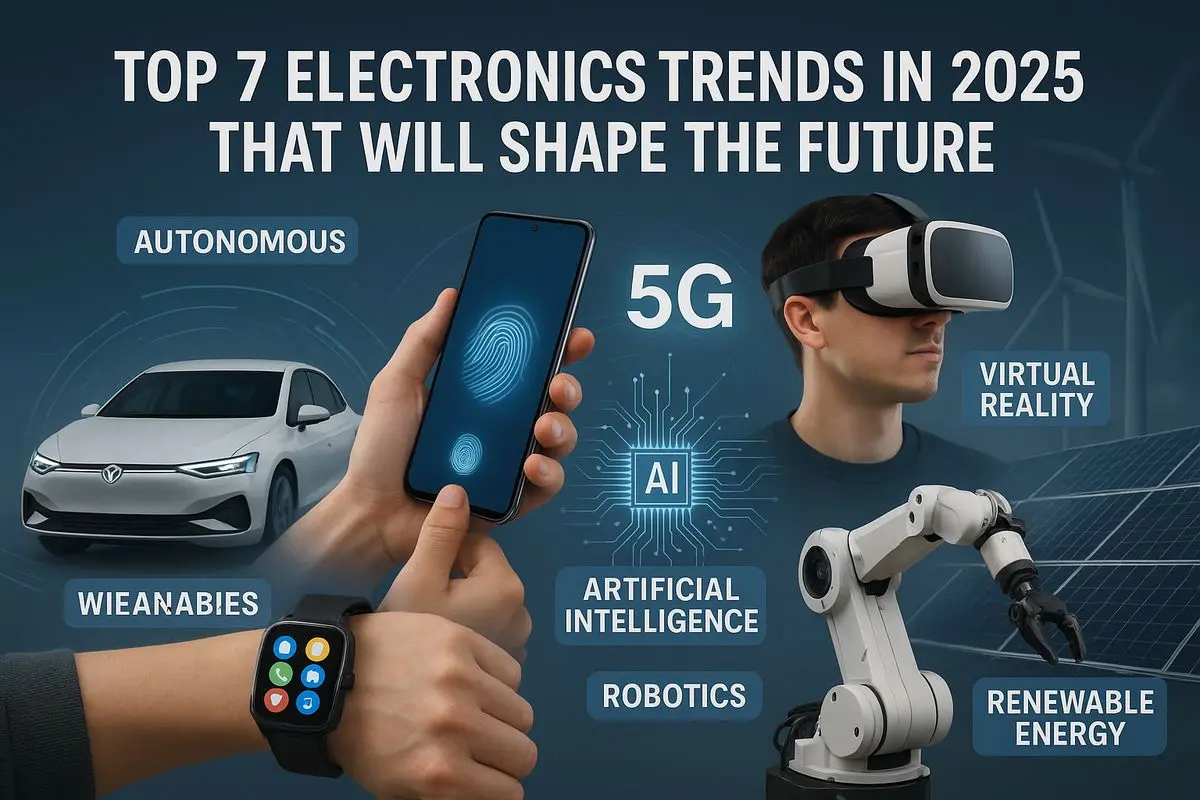
Technology headlines love moonshots, but the changes that actually reshape your week are quieter: an app that writes your first draft, a doorbell that recognises your family, a payment that takes one tap. The most important everyday technology trends are already inside the tools you use, changing how work gets done and how free time feels. Here are the five trends worth understanding, what they mean in practice, and how to benefit from them without chasing every new gadget.
AI Has Moved Into Ordinary Apps
Artificial intelligence stopped being a separate product and became a feature. Email apps summarise long threads, photo apps remove strangers from your holiday pictures, and spreadsheets draft formulas from a sentence of instruction. The practical effect is that routine digital chores — summarising, sorting, drafting, transcribing — now take minutes instead of hours. The skill that grows in value is judgment: checking the summary, correcting the draft, deciding what matters. Among everyday technology trends, this one changes the most jobs, not by replacing people, but by removing the blank page from everyone's morning.
The Connected Home Gets Quietly Useful
Smart home technology is maturing past novelty. The genuinely useful pattern is automation that disappears: lights that follow sunset, heating that learns your schedule, plugs that report energy use so you can see which appliance is quietly expensive. Security devices deserve a careful setup — unique passwords and two-factor authentication — a point reviews of online platforms make repeatedly; even entertainment services, as this Vegasino guide illustrates, now compete on account safety and mobile convenience, because users expect every connected service to protect them properly. Buy one device that solves a real annoyance rather than a houseful of gadgets looking for a purpose.
Faster Connections, Lighter Devices
Each network generation quietly changes behaviour. With 5G and fast home broadband, the heavy work of computing increasingly happens elsewhere: games stream instead of installing, video edits render in the cloud, and a modest laptop feels powerful because the data centre does the lifting. That is why thin laptops and even phones now handle tasks that once needed a workstation. For players, it means quick-session entertainment on any screen — the appeal described in coverage like this WinHero Casino mobile session overview. The trade-off to remember is dependence: when the connection drops, cloud-based tools stall, so keep offline copies of anything truly critical.
Money Moves at the Speed of a Tap
Digital payments have become the default in much of daily life: tap-to-pay cards, phone wallets, instant transfers, and QR codes at market stalls. The convenience is real, and so is the new discipline required — money that leaves with a tap needs a budget that watches it. Most banking apps now categorise spending automatically, turning a vague sense of "where did it go?" into a clear chart. Security habits matter here more than anywhere: approve transactions only in your official bank app, never through links in messages. Of all everyday technology trends, payments are the one where a little caution saves the most money.
Privacy Becomes a Setting, Not a Slogan
After years of vague promises, privacy is turning into concrete controls: apps must now ask before tracking you, browsers block many trackers by default, and phones show which apps used your camera, microphone, or location. The trend to copy is simple — spend ten minutes in your privacy settings. Review app permissions, turn off ad personalisation where offered, and delete accounts you no longer use. Companies are responding to users who check these things, which is why transparency reports and clear terms now appear even in fast-moving entertainment sectors, as roundups such as this WinBeast Casino betting overview show by foregrounding session and payout details.
Wearables and the Quantified Self
Worth a place of its own is the rise of health wearables. Smartwatches and fitness bands have turned sleep, heart rate, steps, and even blood oxygen into everyday numbers, and for many people those gentle nudges — a stand reminder, a sleep score, a weekly activity trend — genuinely change behaviour. The value is in trends, not single readings: one bad night means little, but a month of declining sleep alongside rising resting heart rate tells a story worth acting on. Treat the data as a prompt for better habits rather than a medical diagnosis, share it with your doctor when relevant, and remember the devices work for you — if a metric makes you anxious instead of healthier, switch it off. Measured this way, wearables are a model of how new technology should arrive: quietly, usefully, and under your control.
How to Ride These Trends Without Burning Out
The healthiest approach to new technology is selective adoption. Pick one improvement per season — automate one bill, set up one smart routine, learn one AI feature in a tool you already pay for — and live with it before adding another. Resist subscriptions you cannot describe in one sentence. Keep a short list of accounts and devices, review it twice a year, and delete what you no longer use. The people who benefit most from everyday technology trends are rarely the earliest adopters; they are the ones whose tools stay few, current, and genuinely understood.
Work Itself Is Being Rearranged
A final trend deserves mention: the geography of work. Video calls good enough to feel present, shared documents edited simultaneously from three continents, and automatic transcription of every meeting have made the office a place you visit for specific reasons rather than the default container of a job. The winners in this shift are people who communicate clearly in writing, organise their own days, and keep boundaries between work tools and personal time. The tools will keep improving; the habits are the part each of us must supply. Decide when your workday ends, let notifications respect it, and the same technology that blurred the boundary will politely hold it for you.
Conclusion
The future rarely arrives as a single dramatic invention. It arrives as a slightly smarter app, a faster connection, a quicker payment, a clearer privacy switch. Understanding these everyday shifts lets you choose them deliberately — taking the convenience, keeping the caution, and leaving the hype to everyone else.

